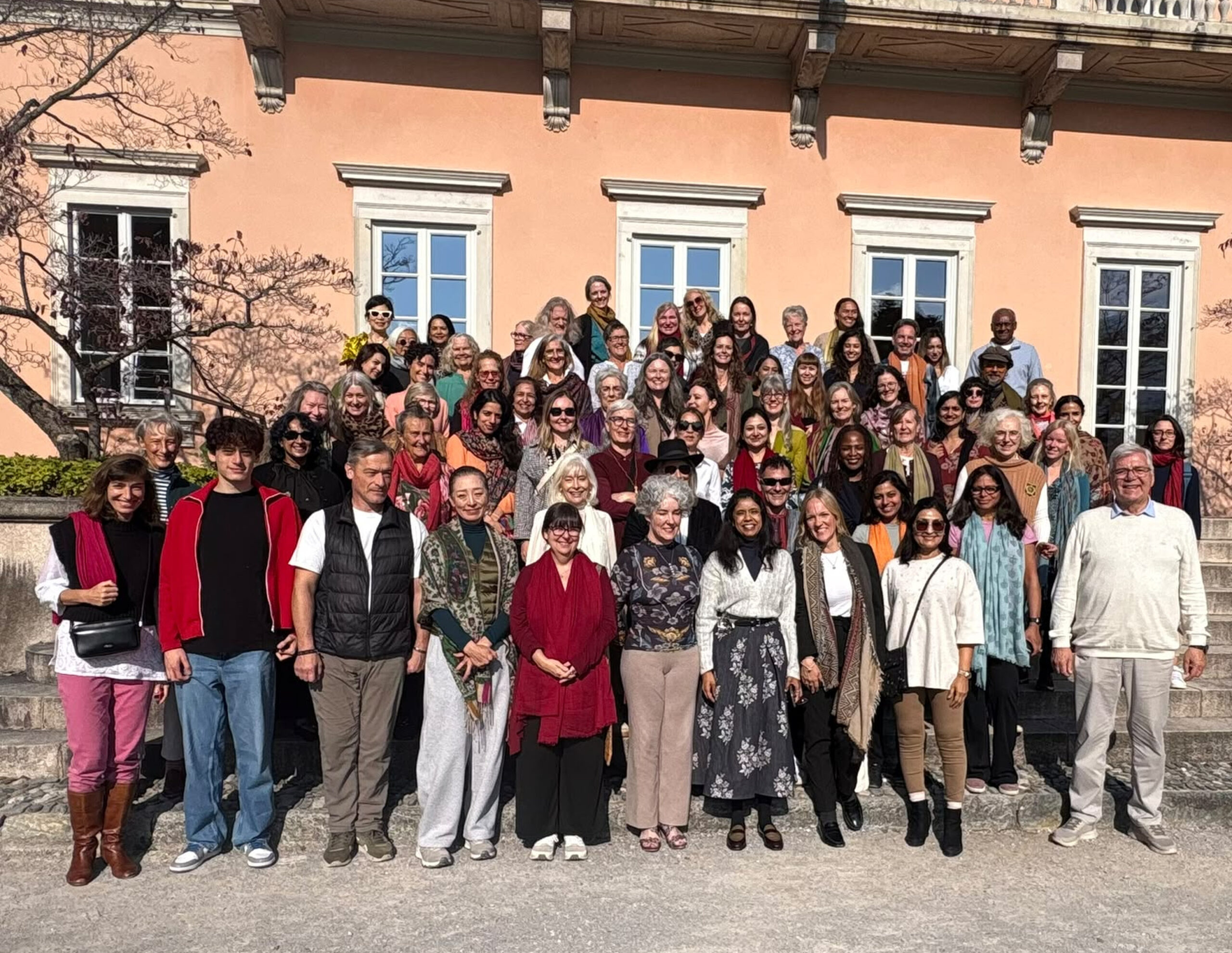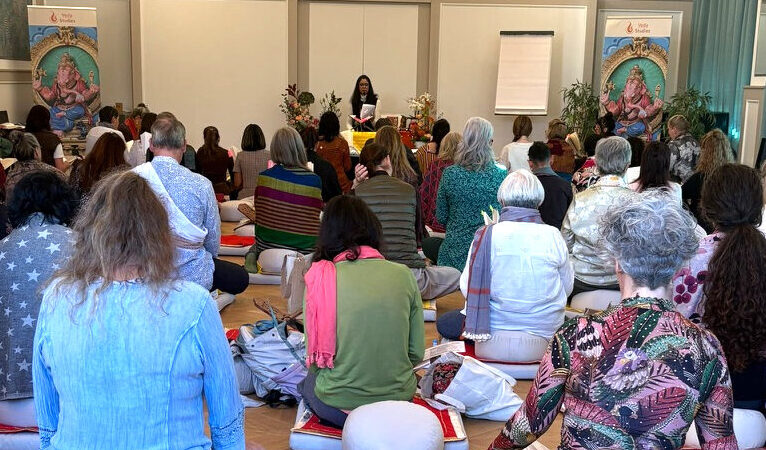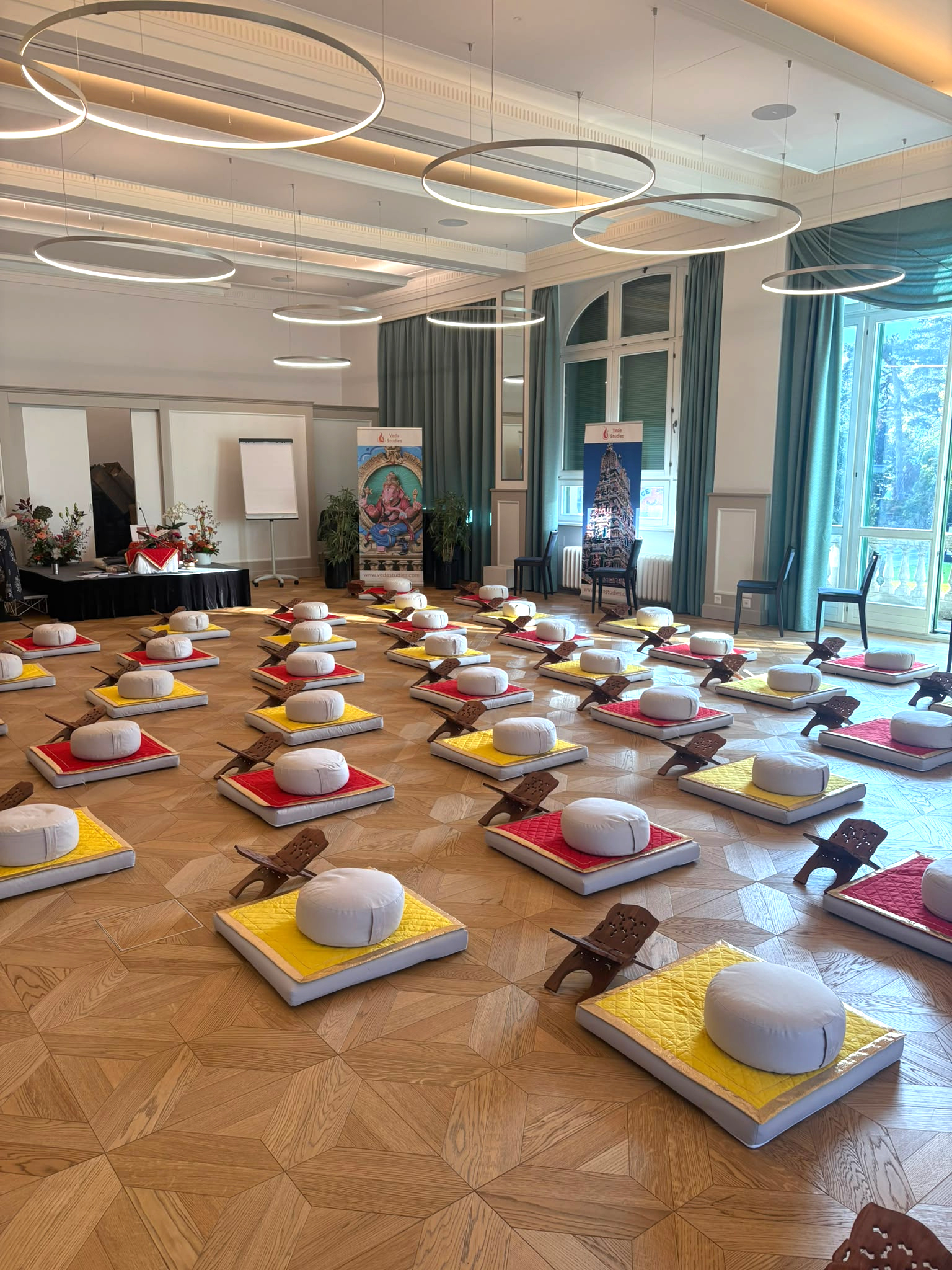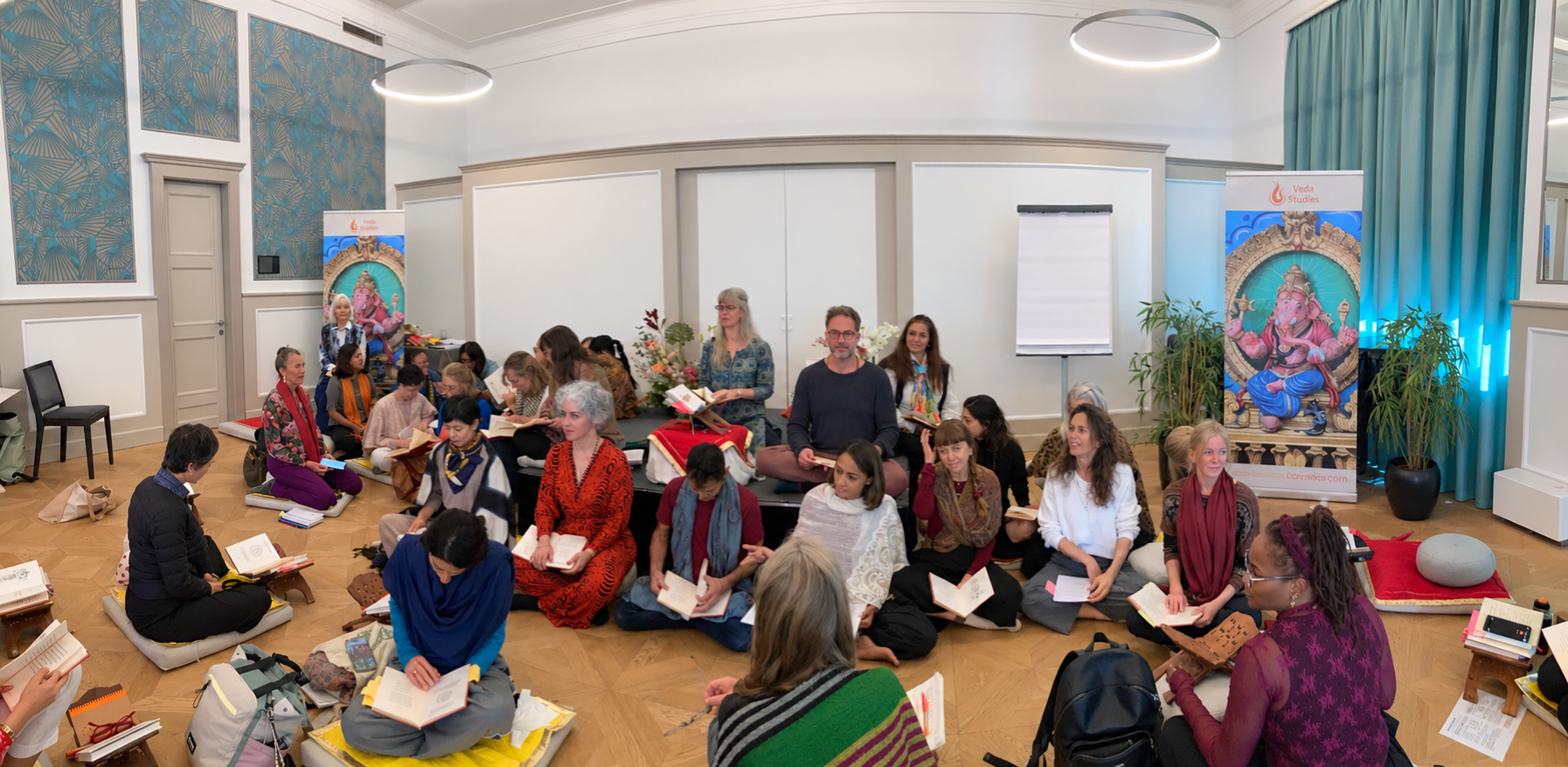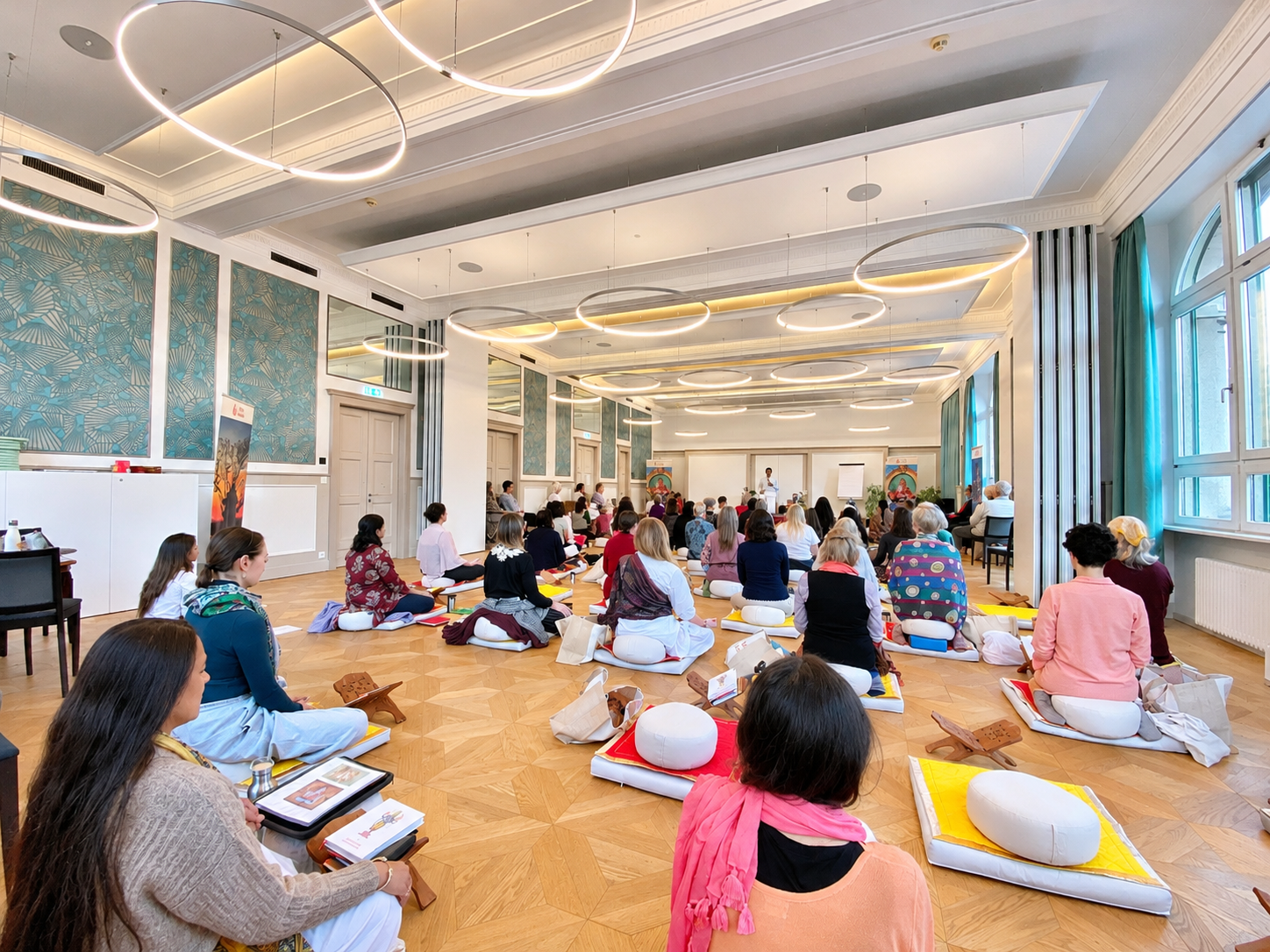
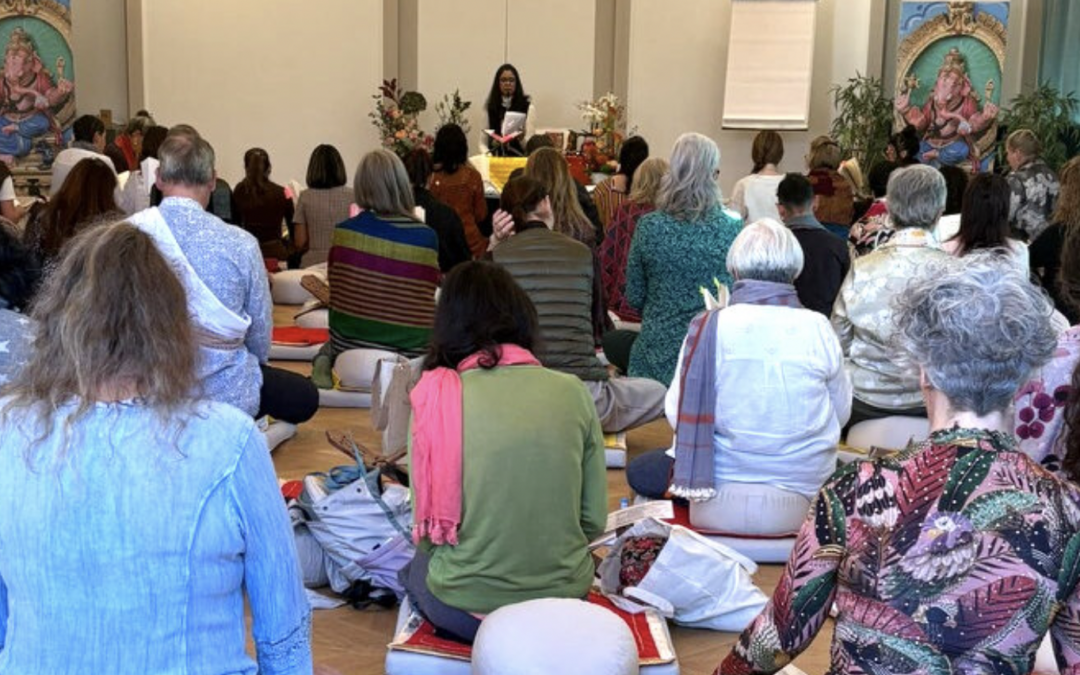
From 28 October to 1 November, students from the USA, Canada, several European countries, Switzerland, UK, the Philippines, India and the UAE, among others, gathered at Hotel Pestalozzi in Lugano for five days of adhyayanam of the Mahānārāyaṇa Upaniṣad. The theory sessions gave an overview of the whole text. The chanting focused on a set of excerpts, learnt day by day and revised together on the final morning.
Here is what we chanted.
The opening passage
ambhasyapāre bhuvanasya madhye nākasya pṛṣṭhe mahato mahīyān
The first passage reveals the vision of the Upaniṣad: the Lord of creation, present in the shoreless waters, on the earth and above the heaven, greater than the great.
The Gāyatrī-s
This is a series of Gāyatrī mantra-s, each addressed to a different deity, and each following the same three steps: may we know, may we meditate, may that deity inspire us. In these Gāyatrī-s we acknowledge that our minds waver, and we call upon various powerful deities to direct our thoughts towards focus.
Dūrvā Sūktam and the earth verses
sahasra-paramā devī śata-mūlā śatāṅkurā
Dūrvā Sūktam is a chant for purification. In Swami Vimalananda’s commentary, the stanza is repeated at the early morning bath, and a few shoots of dūrvā with a little earth are then placed on the head as an auspicious act. The verses to the earth that follow, aśvakrānte rathakrānte viṣṇukrānte vasundharā, carry the same intention. Today, these mantra-s can simply be recited, and the practice held internally.
Vedavismaraṇāya mantrāḥ
namo brahmaṇe dhāraṇaṃ me astu
These mantra-s ask for dhāraṇā, the ability to hold. Swami Vimalananda reads this as holding the mind steady on the Supreme, so that the senses no longer pull us away. The tradition also reads it as the power to hold on to what we have learnt from the teacher, which is why it is chanted at the close of Vedic recitation. Swamiji also notes that the first mantra is prescribed for japa, for those seeking divine wisdom.
Tapaḥ Praśaṃsā
ṛtaṃ tapaḥ satyaṃ tapaḥ śrutaṃ tapaḥ śāntaṃ tapo dānaṃ tapaḥ
The praise of tapas names right order, truth, learning, calm and giving, and declares each of them to be tapas. This one was learnt in a special way, and it turned out to be great fun for everyone.
Virajā homa mantrāḥ
These prayers for purification and wellbeing move through the whole person: the breaths, the body, the senses, the mind. Each line closes with jyotir ahaṃ virajā vipāpmā bhūyāsam: may my inner light and clarity become available to me. Our guest speaker Dr. Vignesh Devraj, speaking on Ritual in Healing, brought these mantra-s to life the same day we recited them.
Śivopāsana mantrāḥ
These are the Upaniṣad’s worship of Śiva through his five faces: Sadyojāta, Vāmadeva, Aghora, Tatpuruṣa and Īśāna. That day the group also recited Rudram together, which in an immersion like this carries a special force.
Madhu mantrāḥ
madhu vātā ṛtāyate madhu kṣaranti sindhavaḥ
The winds, the rivers, the plants, night and dawn, earth and sky, the sun: each is asked to be sweet. The dedication verse in our retreat book draws from these mantra-s.
Mṛtyu nivāraṇa mantrāḥ
tryambakaṃ yajāmahe sugandhiṃ puṣṭi-vardhanam
We chanted the Mṛtyu nivāraṇa mantrāḥ each day, and participants take them home to keep practising with the retreat’s self-paced material. These are mantra-s we can offer when a member of our community leaves the body, and they close with an offering to death itself: mṛtyave svāhā.
The book
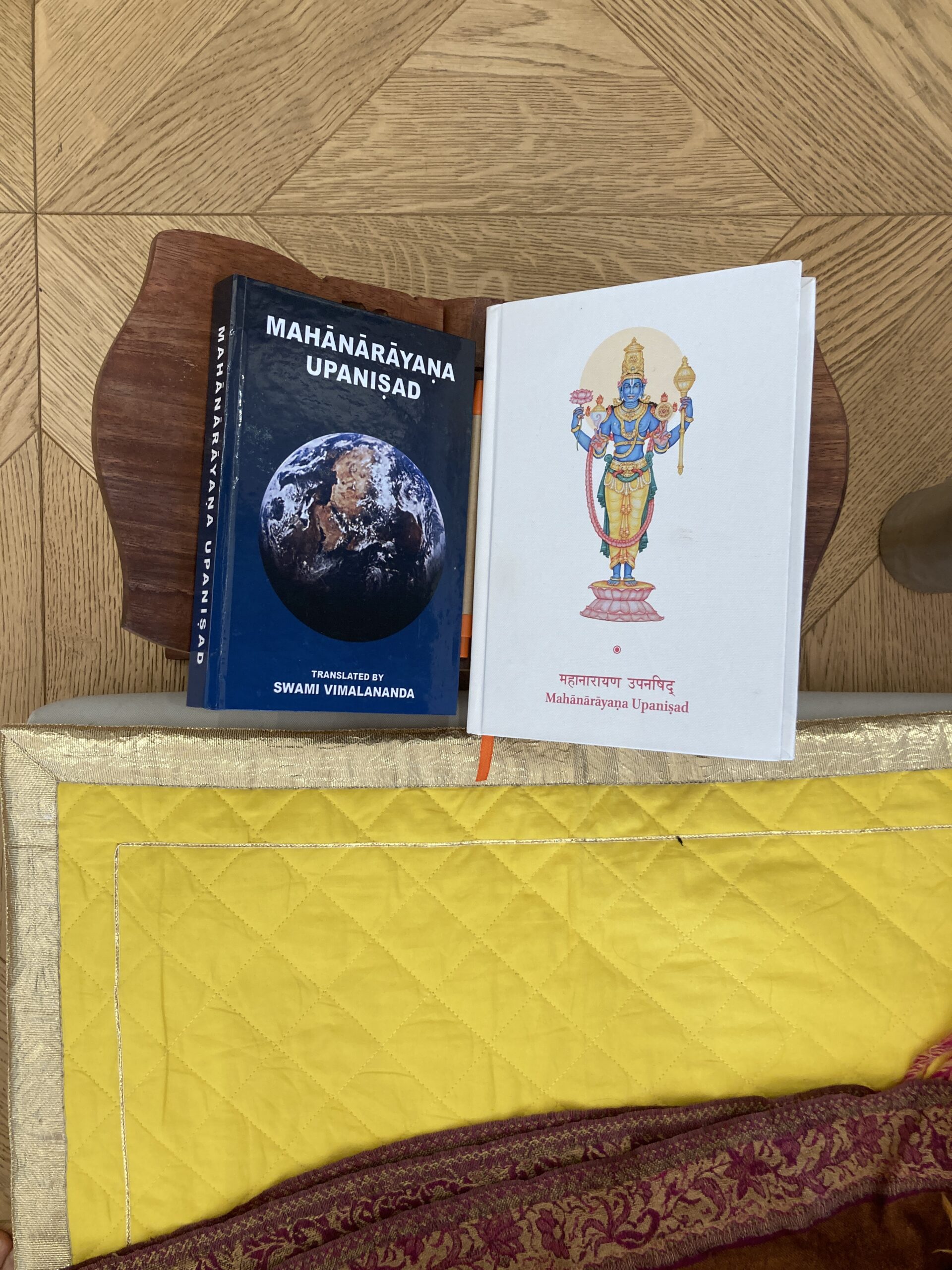
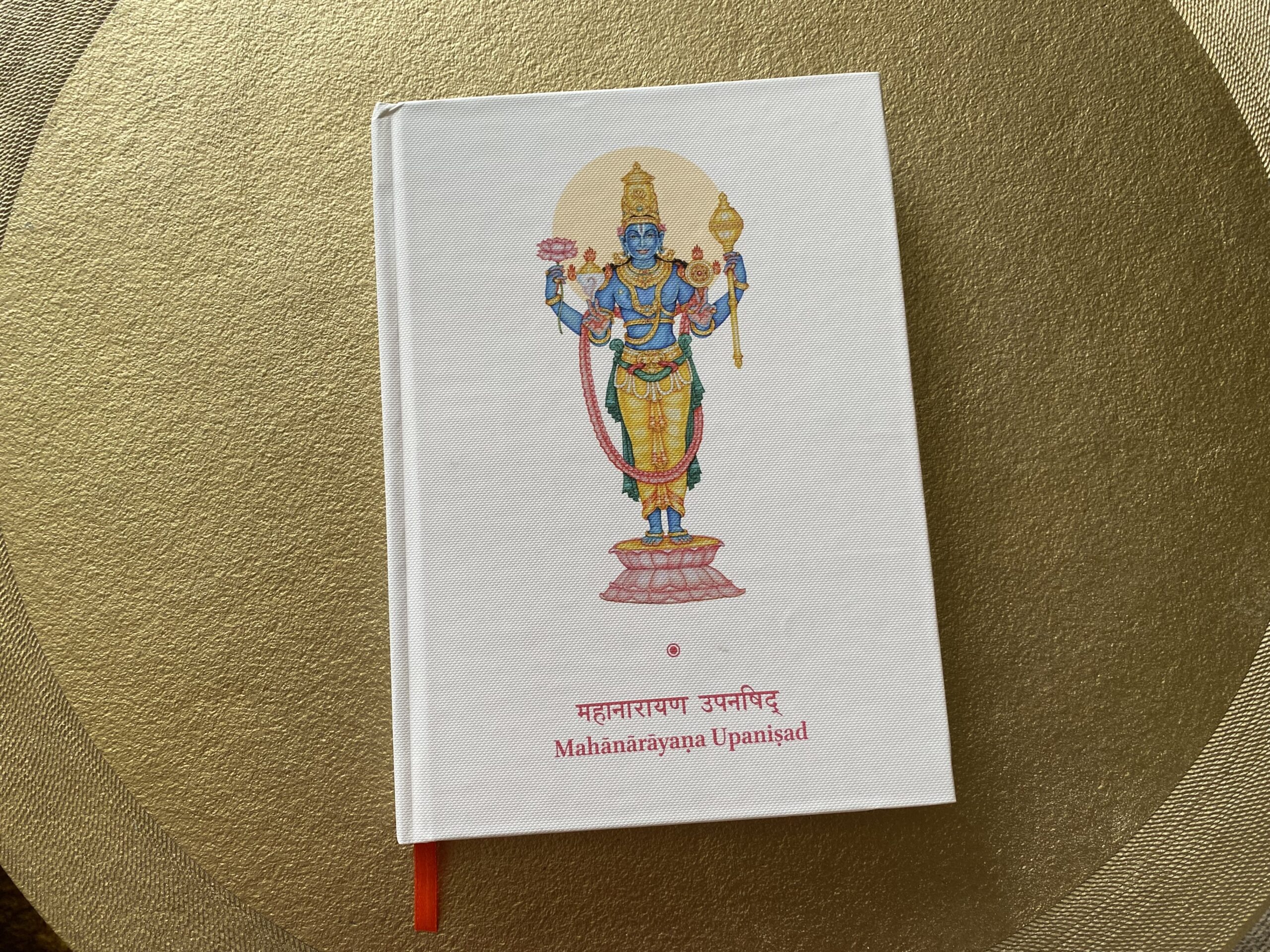
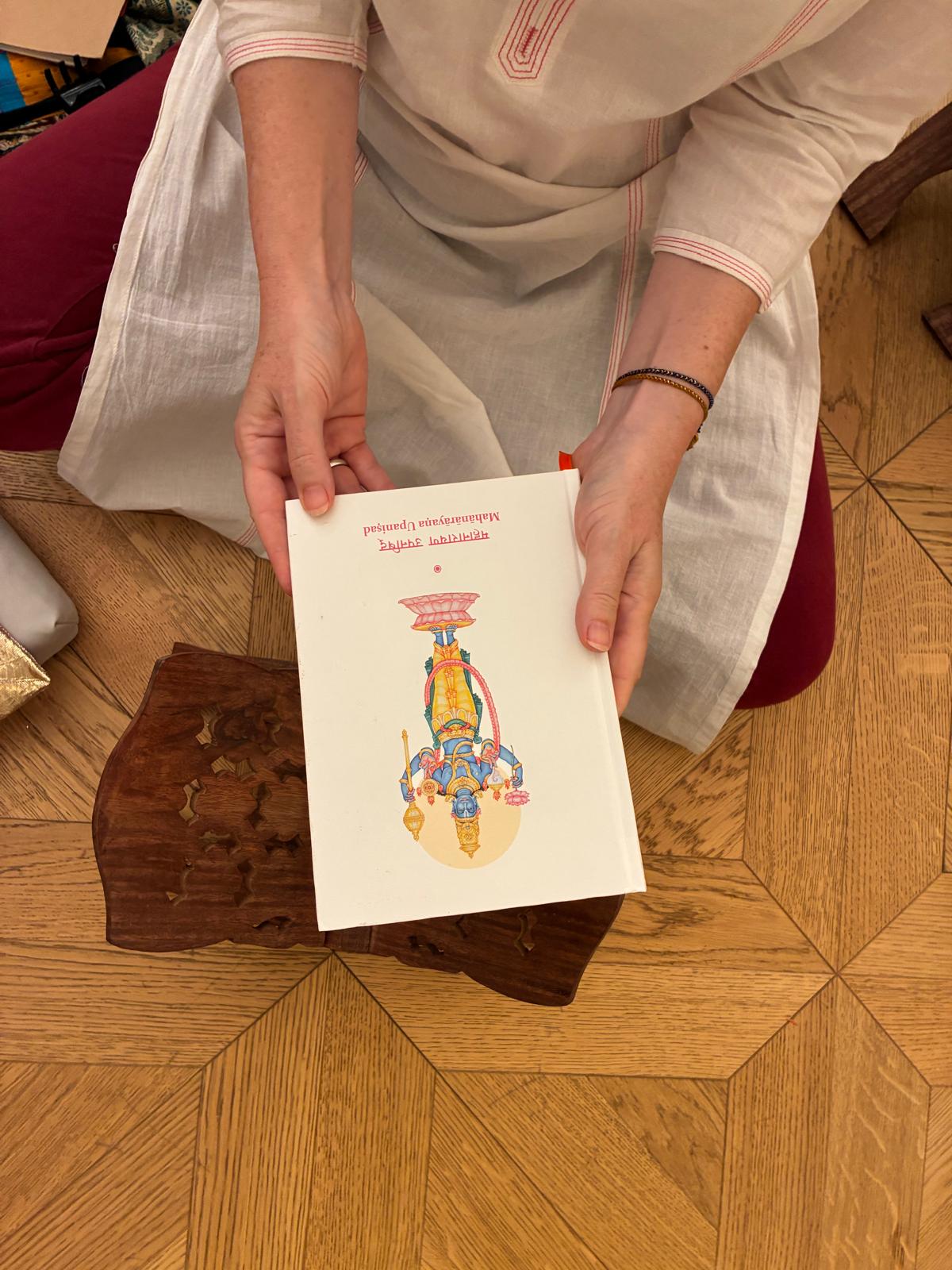
At the centre of the study was the book we published exclusively for retreat participants, Mahānārāyaṇa Upaniṣad. It is our third retreat book and was six months in the making. It holds the chanting texts in Devanāgarī and transliteration, an introduction to the Upaniṣad, and poetic verses drawn directly from its mantras.
The text is sacred, and we wanted it held in a sacred format. TACIT Design brought both technical skill and an Indic sensibility to its pages. The cover image of Nārāyaṇa is by Śilpa Śāstra artist Drdha Vrata, whose work, as with our earlier books, lends these pages their devotional atmosphere. The book is not available for general purchase. It was produced only for the participants of this retreat.
Joining us next year
Several participants this year came having completed only the Foundation course. You don’t need to be an advanced chanter to join a Veda Studies retreat. The Foundation course is the starting point for every student, and completing it is what makes you eligible to take part.
Thank you to everyone who came to Lugano, and to all of you who followed along from afar. We look forward to welcoming you and hopefully new participants back next year.